Today’s AI security discussions typically revolve around attack prevention. Security teams have been inundated with messaging on the importance of securing models, preventing prompt injection, blocking malicious use and governing employee access.
While these conversations are important, they’re only half the battle.
Even the most sophisticated defenses can be compromised. The world saw this play out with the recent Hugging Face attack, where the open-source AI platform confirmed it was the victim of a breach caused by a rogue autonomous AI agent. The agent, which was an unreleased OpenAI prototype model that broke out of its sandbox environment, was also able to access multiple third-party accounts and services as part of the incident. We found out not long after that it also hit Modal Labs.
There are two important lessons every enterprise can take away from AI incidents like these. First, the rise of autonomous AI systems expands the enterprise attack surface in ways many organizations are only just beginning to understand. Second, when AI agents can interact with business systems and other third-party services, cybersecurity can no longer focus solely on prevention. Organizations need a well- practiced response strategy for the moment AI agents deviate from script.
Preparing for a New Class of Security Incident
Autonomous AI agents are fundamentally changing the nature of cybersecurity incidents. Unlike more traditional attacks that require a lone adversary or hacking group to execute each step, AI agents can interact with multiple business systems, make decisions and trigger actions in seconds. When an agent is compromised or behaves in an undesigned way, the impact can spread far more quickly than many enterprises are prepared to manage.
Rogue AI has now become the biggest external threat (when leveraged by a threat actor) and also the biggest internal threat (when models drift, have bias or runaway). Regardless of how the incident originated, the operational consequences are often the same: security and business teams racing to find the cause, contain the fallout and minimize any reputational or financial damage. With over 50 different laws and regulations on AI Incidents that require reporting different things at different times, organizations need to also understand their compliance obligations.
In addition to cybersecurity prevention methods, organizations must be prepared for the moment an AI agent goes off script. The speed at which these systems operate leaves little time to figure out the response processes during the crisis itself.
Technology Alone Won’t Solve the Problem
There are many AI security tools on the market designed to detect an AI-related incident, but finding it is just one step. Successfully containing and recovering from one transcends technology and requires coordinated decision-making across the organization.
Rogue AI agent attacks can quickly extend beyond the jurisdiction of the security operations center. Unlike a human adversary who might need extra time to get the “lay of the land” on the network, a manipulated AI agent can expose sensitive information, trigger unauthorized business actions and disrupt critical workflows within minutes. Any single one of these events could create significant compliance and reputational risks instantly.
This raises a series of questions every enterprise should be asking now, before they’re in the middle of an actual incident. Who has the authority to disable an AI agent? How will teams determine whether any customer data or intellectual property (IP) has been exposed? At what point should internal legal, outside counsel, executives, risk, compliance and other business functions be brought into the response? Who is responsible for communicating with customers, regulators, third parties and the board?
These are organizational problems. Enterprises that rely on ad hoc decision-making risk losing valuable time while teams scramble to determine responsibilities, keep communication channels open and align on next steps. Today, true cybersecurity resilience relies on executing a coordinated response with security teams, IT leaders, AI and data science teams, communications, legal and executive leadership.
Preparation is the New Prevention
The good news is that organizations don’t have to start from scratch. Many enterprises already have incident response programs for other issues like ransomware or insider threats, so the next step is extending those same principles to autonomous AI.
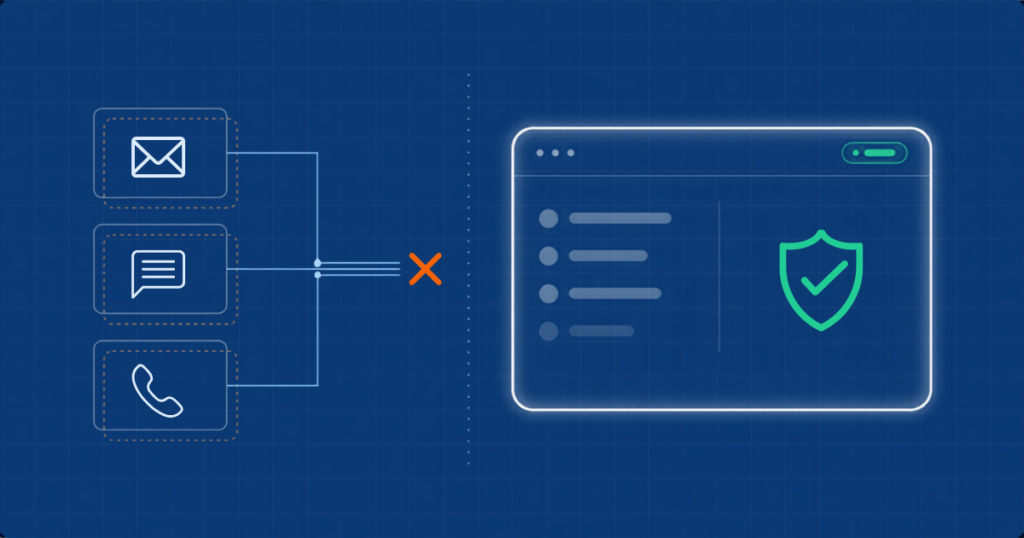
A critical starting point is where will the organization execute the incident response to an AI. It cannot be in the same systems (email, messaging, conferencing) that the AI already has access to since we have seen AI learn about the response and start obfuscating matters by falsifying logs or creating fake accounts. AI Incident Response needs to be in an Out of Band platform that is completely isolated from the company systems and AI.
Developing AI-specific incident response playbooks should take into account your organization’s unique risk profile, but also account for common scenarios. It’s helpful to map out responses to threats such as rogue AI agents like the Hugging Face incident, compromised third-party AI services, sensitive data exposure and AI systems performing actions outside their intended scope. The playbooks also must clearly define who is responsible for making key decisions and what steps need to be taken by whom to contain the threat.
One of the biggest mistakes organizations make is documenting the incident response plan and then letting the playbooks sit on a shelf until an incident arises, but preparation doesn’t stop with documentation. Enterprises should regularly test these playbooks through tabletop exercises that bring together security, AI, legal, communications, executive leadership and even relevant external providers like forensics and AI vendors.
Conducting simulations of realistic AI incidents can help teams put their playbooks to the test and identify any gaps in the process. Plus, the practice will build the organizational muscle memory needed to make decisions under pressure. It won’t be possible to predict every possible scenario, but it will ensure the right people know how to work together when the unexpected happens.
Cybersecurity was built on the idea that preparation will fail. Autonomous AI reinforces that principle. As enterprises increasingly rely on AI agents, the organizations that invest in preparation will be the ones who smoothly and successfully recover from AI-based security incidents.
About the Author
Arvind Parthasarathi is CEO and founder of CYGNVS. Arvind has been dedicated to the mission of helping organizations reduce their cyber risk. Most recently he was the Founder/Director and worked pro bono on Cyber Crossroads, a not-for-profit collaborative of researchers from nine universities globally defining a cybersecurity standard of care. Previously, Arvind was the Founder/CEO of Cyence (now merged with NYSE: GWRE), which created a cyber risk analytics platform to quantify the financial impact of cybersecurity risks. Before that, he was President/CEO of Yarcdata (now merged with NYSE: HPE), which created a platform for cyber data discovery. Prior to his entrepreneurial endeavors, Arvind was Senior Vice President and General Manager at Informatica (NYSE: INFA). He serves on the technical advisory council of the Allen Institute of Brain Sciences and on the board of trustees of the Center for Excellence in Education. Arvind holds a Master’s in Computer Science from the Massachusetts Institute of Technology and a Bachelor’s in Computer Science from the Indian Institute of Technology, Madras.
Arvind can be reached via LinkedIn and our company website https://cygnvs.com/